THE INTERNET OF THINGS:
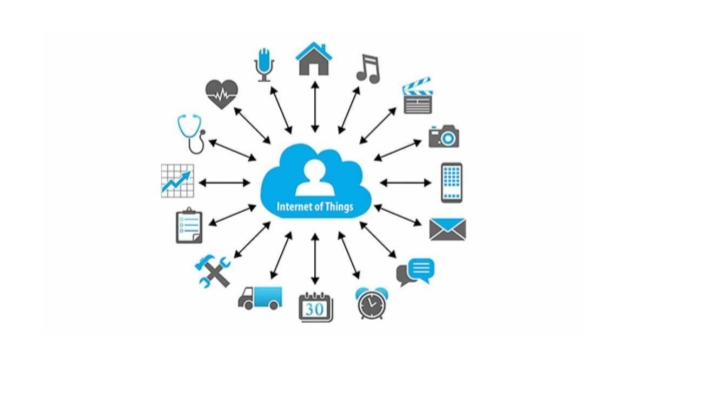
The Internet of things (IoT) describes physical objects (or groups of such objects) that are
embedded with sensors, processing ability, software, and other technologies, and that connect
and exchange data with other devices and systems over the Internet or other communications
networks.
Manufacturing:
The IoT can connect various manufacturing devices equipped with sensing, identification,
processing, communication, actuation, and networking capabilities. Network control and
management of manufacturing equipment, asset and situation management, or manufacturing
process control allow IoT to be used for industrial applications and smart manufacturing. IoT
intelligent systems enable rapid manufacturing and optimization of new products, and rapid
response to product demands.
Digital control systems to automate process controls, operator tools and service information
systems to optimize plant safety and security are within the purview of the IoT. IoT can also be
applied to asset management via predictive maintenance, statistical evaluation, and
measurements to maximize reliability Industrial management systems can be integrated with
smart grids, enabling energy optimization. Measurements, automated controls, plant
optimization, health and safety management, and other functions are provided by networked
sensors.
In addition to general manufacturing, IoT is also used for processes in the industrialization of
construction.
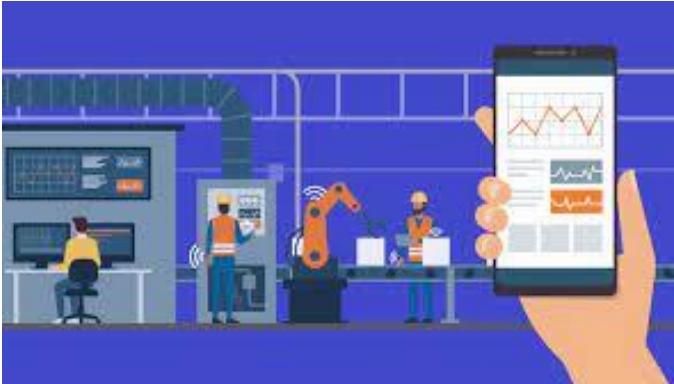
• Also known as IIoT, industrial IoT devices acquire and analyze data from connected
equipment, operational technology (OT), locations, and people. Combined with
operational technology (OT) monitoring devices, IIoT helps regulate and monitor
industrial systems. Also, the same implementation can be carried out for automated
record updates of asset placement in industrial storage units as the size of the assets can
vary from a small screw to the whole motor spare part, and misplacement of such assets
can cause a percentile loss of manpower time and money.
domain for the purposes of reconnaissance, surveillance, and other combat-related
objectives. It is heavily influenced by the future prospects of warfare in an urban
environment and involves the use of sensors, munitions, vehicles, robots, human-
wearable biometrics, and other smart technology that is relevant on the battlefield.
• Monitoring and controlling operations of sustainable urban and rural infrastructures like
bridges, railway tracks and on- and offshore wind-farms is a key application of the IoT.
The IoT infrastructure can be used for monitoring any events or changes in structural
conditions that can compromise safety and increase risk.
How SIoT Works?
IoT devices built-in with sociability will broadcast their abilities or functionalities, and at the same
time discovers, navigates and groups with other IoT devices in the same or nearby network for
useful service compositions in order to help its users proactively in every day’s life especially
during emergency.
Social IoT Examples
IoT-based smart home technology monitors health data of patients or aging adults by analyzing
their physiological parameters and prompt the nearby health facilities when emergency medical
services needed. In case emergency, automatically, ambulance of a nearest available hospital will
be called with pickup location provided, ward assigned, patient’s health data will be transmitted
to the emergency department, and display on the doctor’s computer immediately for further
action. IoT sensors on the vehicles, road and traffic lights monitor the conditions of the vehicles
and drivers and alert when attention needed and also coordinate themselves automatically to
ensure autonomous driving is working normally. Unfortunately, if an accident happens, IoT
camera will inform the nearest hospital and police station for help.
PROS of IOT:
1. Improved productivity of staff and reduced human labor
Thanks to IoT solutions, mundane tasks can be done automatically, so human resources may be
transferred to more complex tasks that require personal skills, especially out-of-the-box thinking.
This way, the number of workers can be minimized, which results in reduced costs of business
operation.
2. Efficient operation management
Another significant benefit offered by the interconnection of smart devices is automated control
over multiple operation areas, including, among others, inventory management, shipping
tracking, fuel and spare parts management. For example, this approach involves using RFID tags
and a corresponding network of sensors to track the location of equipment and goods.
3. Better use of resources and assets
The automated scheduling and monitoring implemented with the help of interconnected sensors
enable higher efficiency of resource use, such as improved power management and water
consumption. For example, simple motion detectors may save significant sums of money in
electricity and water bills, thus making both small and large businesses more productive and eco-
friendlier.
4. Cost-effective operation
Due to the reduced downtime periods, ensured by automatically scheduled and controlled
maintenance, supply of raw materials, and other manufacturing requirements, the equipment
may have a higher production rate resulting in bigger profits. Again, IoT devices greatly facilitate
management within individual departments and across the whole enterprise structure.
5. Improved work safety
In addition to the abovementioned benefit, the scheduled maintenance is also highly
advantageous for ensuring operational safety and compliance with the required regulations. In
their turn, safe working conditions make the enterprise more attractive for investors, partners,
and personnel, increasing the brand reputation and trust. Smart devices also reduce the
probability of a human error during various stages of business operation, which also contributes
to a higher level of safety. In addition, a network of IoT devices such as surveillance cameras,
motion sensors, and other monitoring devices can be utilized to ensure the security of an
enterprise and prevent thefts and even corporate espionage.
6. Improved customer service and retention
The abovementioned collection of user-specific data achieved by using smart devices also helps
businesses to understand the expectations and behavior of customers better. IoT also improves
customer service by facilitating follow-ups after sales such as automatic tracking and reminding
the customers about required maintenance of purchased equipment after its predefined period
of use, the ending of warranty periods, etc.
7. Better business opportunities
Due to the increased effectiveness, the company that uses IoT solutions is able to offer a wider
range of services or products, or increase their quality in comparison with its competitors, but at
the same price. As an alternative, such a company may perform more challenging tasks in terms
of production difficulty, time, or quantity. Altogether, the use of smart solutions makes an
enterprise more competitive and attractive as a potential business partner.
DRAWBACKS OF IOT
Though the pros of the Internet of Things are especially desired in terms of increasing business
profitability, this technology also involves certain threats. For the sake of fairness, let us take a
brief look at the disadvantages of IoT.
1. Security flaws
Insufficient security measures are the most widespread drawback that hinders the development
of IoT as a whole. The fear of data leaks is always present because smart devices collect and
transmit confidential information that can lead to drastic consequences if revealed. Yet, IoT
solutions rarely contain adequate anti-tampering means or comply with all applicable data
protection standards, encryption protocols, and other regulations and technologies designed to
prevent unauthorized access to sensitive data. Failure to ensure sufficient data protection may
lead to costly, disastrous, and even tragic consequences: identity thefts, loss of corporate secrets,
equipment or products, sabotage, etc.That’s why the development and implementation of IoT
solutions in business must be performed by professionals who can ensure that the installed
hardware and software systems have no weak spots and are well-protected from any hacking
attempts.
2. Associated costs
Implementation of IoT infrastructure in a business enterprise implies building an extensive
network comprising multiple smart devices and the associated technical infrastructure, including
the power supply grid and the communication network. That’s why such an initiative requires
significant investments to install, maintain, and gradually expand the created network according
to future needs. Though IoT solutions provide multiple benefits, it takes a lot of time before they
become profitable, and their financial benefits exceed the initial costs of their implementation.
3. Power supply dependence
While IoT implies the autonomous operation of multiple devices, such a network remains highly
dependent on external factors that must be considered in order to implement it successfully in
business. First and foremost, smart devices are dependent on a stable and sufficient supply of
electricity, so a well-planned additional infrastructure must be provided. It should include a
suitable number of UPS devices, surge protectors, and other equipment with relevant ingress
protection (IP) ratings.
4. Network dependence
The core feature of the Internet of Things is the immense number of interconnections between
various devices and access to the global network. For this reason, IoT devices additionally require
an infrastructure that ensures the uninterrupted wired and wireless communication with high
throughput, low latency, and constant access to the Internet. So, to enjoy the benefits of IoS, a
business enterprise first should provide the whole range of the required networking equipment:
cables, routers, hubs, local data storage means, and so on.
5. High skill requirements
IoT solutions require responsible, experienced professionals who fully understand the scope and
possible consequences of their work. Deploying, setting up, maintaining, and changing the scale
of IoT solutions in a business enterprise demand highly skilled administrators who may be hard
to find and recruit as they would expect respectively high salaries. All personnel who would have
to deal with the implemented network of smart devices should receive proper training and sets
of instructions. So, while IoT reduces the need for human resources, the remaining staff must be
well-trained in order not to disrupt the operation of smart devices and not to cause the” snowball
effect.
CONCLUSION
As you can see, IoT is rightfully regarded as one of the most promising digital technologies that
will definitely become more widespread and useful in the nearest future. Even at the current
state, the capabilities of IoT solutions are impressive, and their advantages are tempting.
However, it is important to realize that the integration of IoT in an enterprise requires a lot of
efforts and skills in order to achieve those benefits without suffering from its drawbacks. That’s
why the most reasonable course of action is to use the services of responsible and experienced
professionals in order to get an effective IoT solution. Contact us, and our skilled developers will
provide you with the efficient software products specifically designed to integrate the Internet
of Things in your business.

 Site Title